
1. Choose one direction and one audience
A useful business idea answers three questions: who you serve, which problem you solve, and what the customer may pay for. Do not begin by trying to appeal to everyone. The more specific the first audience, the easier it is to shape the offer, website language, and first acquisition channel.

2. Validate demand before large expenses
Before renting space, buying a large batch, or commissioning complex development, run a small test. Show a short description of the idea to five to ten people from your chosen audience. Listen beyond compliments: repeated questions, objections, and willingness to take the next step are more informative than an abstract “interesting.”
- Ask the person to explain in their own words what they understood from the offer.
- Ask how they solve the problem today and what does not work for them.
- Offer one next step: an enquiry, call, meeting, trial order, or quote.
3. Shape a simple offer
- WhoDescribe the specific people or companies you are starting with.
- What is difficultName one task, inconvenience, or risk you help reduce.
- What you doExplain the result plainly: a service, product, delivery, consultation, or ready-made package.
- What happens nextLeave one clear CTA: write, request a quote, book, or receive a trial result.
4. Check the requirements that apply
Before your first sales, check the rules for your country and city: whether registration is required, which taxes and permits apply, how contracts and refunds work, and which customer data you may collect. These requirements depend on the jurisdiction and business type, so do not copy someone else’s template without checking with a qualified professional.
5. Build the first website and launch materials
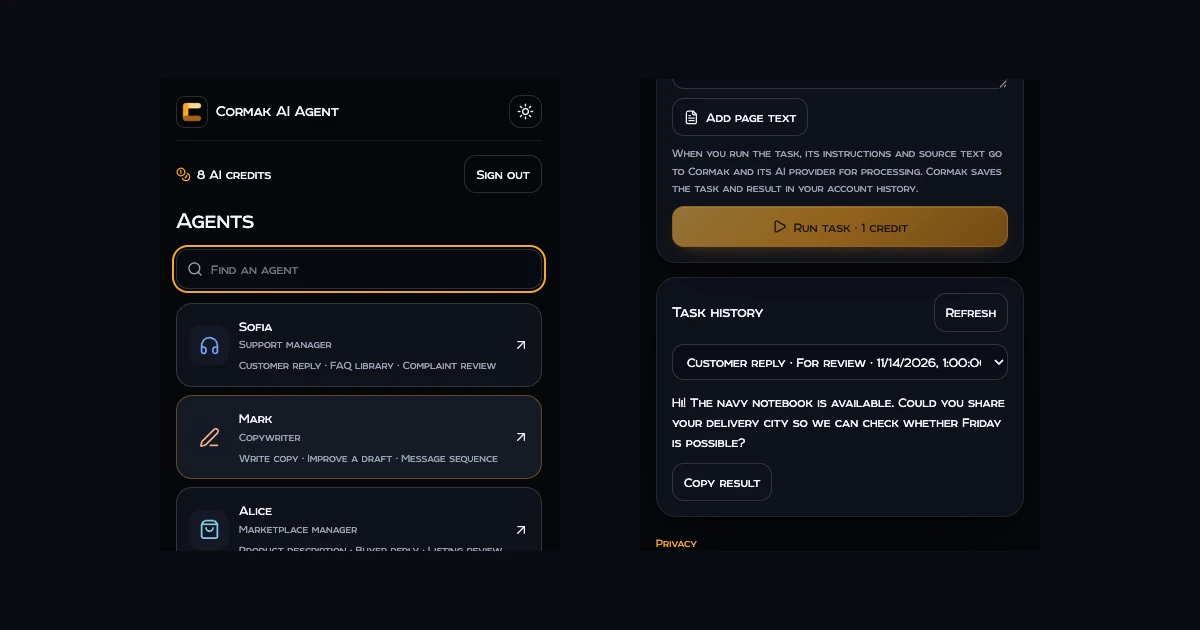
At the beginning, you do not need a large portal. You need a page that explains the offer in a few seconds, shows a relevant visual, answers the main questions, and leads to a real contact. Cormak can help with copy, structure, and images: describe the audience, task, constraints, and desired action, then review the result as a customer would.
6. Find your first customers and listen to questions
First enquiries are not only about revenue. They show which copy is unclear, which request repeats, where customers hesitate, and which result they value. Record the questions and improve one part of the offer, page, or process each week.
Checklist before your first launch
- It is clear who the product or service is for.
- One concrete benefit is described without invented promises.
- There is a real contact channel you check regularly.
- The page works on a phone and has one primary CTA.
- You know which questions you will ask your first potential customers.